
by: Dr. Aradhana Mudambi
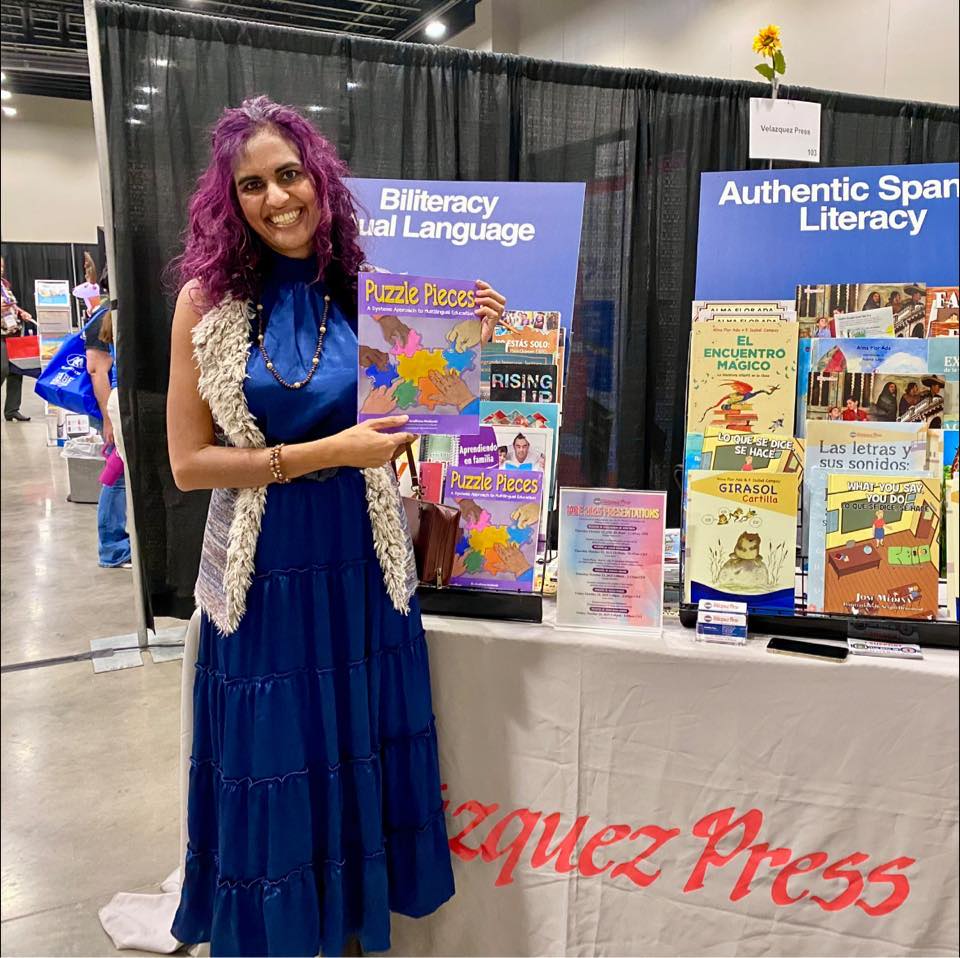
So for starters, my apologies for not being on target with my weekly blog. I’m determined to be back on schedule from here on out. An early New Year’s resolution, shall we say? But the good news? For the past year, I have been working on my book, and it’s out! Puzzle Pieces: A System’s Approach to Multilingual Education.
I’m so excited that my book is out, not only because of my own selfish thrill to see the project accomplished, but because I believe strongly in the timeliness of the book. Puzzle Pieces: A System’s Approach to Multilingual Education focuses on understanding the similarities and differences across multilingual programs so that we can save fiscal resources and build culture by working together.
5 years after the start of the pandemic, our schools, for the first time, are seeing their funds threatened. Pandemic recovery funds are running out. Title 3 funds are definitely on the chopping block. And we need fiscal resources to run, especially our Dual Language Bilingual Education (DLBE) programs but also our mainstream English-centered and World Language programs. Unfortunately, because we tend to work in silos within the multilingual department (and in education in general), we tend to need to stretch our funds further than they can stretch. My book works to eliminate this conundrum.
You see – often, our English-only classrooms (Sheltered English Immersion, monolingual, mainstream) fall under our Directors of Curriculum and Instruction with DLBE and English as a Second Language falling under the Director of Multilingual Education. Because these individuals often do not work together, not because they do not want to but because they see their spheres as so different, we often end up spending more money on instructional resources by buying separate instructional programs for each of our programs. Furthermore, we struggle as we hire multiple people to conduct professional development, trying to address each program’s needs. In reality, if we identify the similarities across programs, acknowledging the differences, we can choose resources together, and we can create professional development opportunities for everyone to enjoy together.
This is what I do in Puzzle Pieces: A System’s Approach to Multilingual Education. I analyze the structures of and instructional strategies needed by the five main puzzle pieces that make up multilingual education: Sheltered English Immersion (SEI), English as a Second Language (ESL), Transitional Bilingual Education, Dual Language Bilingual Education (One-Way and Two-Way), and World Language. I help the reader understand the similarities across the programs while also helping the educators differentiate among them. By understanding the similarities and differences across programs, districts and schools that use my book should in turn save money while maximizing student output.
And that’s the key: maximizing student output. I am in no way encouraging educators to cut corners. I am encouraging them to take a systems approach grounded in research-based evidence so that we can maximize student results by working together.
Working together not only saves money, but it also allows us to build a stronger culture at our schools. So many principals and teachers have told me over the years that when they have a dual language strand within their schools that they feel like they have two schools within the same building. SEI teachers often feel threatened by DLBE programs. DLBE teachers feel disrespected by SEI teachers. Additionally, World Language teachers feel like the proverbial step child, ignored all together. And the current, overall culture of polarization has exacerbated these feelings. By understanding how our programs overlap; by recognizing that we are all teaching the same standards albeit sometimes in a different order or with a different emphasis on metalinguistic skills, we can in fact find ways to work together across the aisle. And this stronger culture will result in a happier work environment and a much better model for our students as to how we want them to behave with one another.
As I continue to blog, we will further explore these similarities and consider other topics as well. If you are interested in exploring the book further, I am including the QR code below to access it on the Velazquez Press website. Together, let us keep giving our students the best education we can.

 Language and Equity Blog