
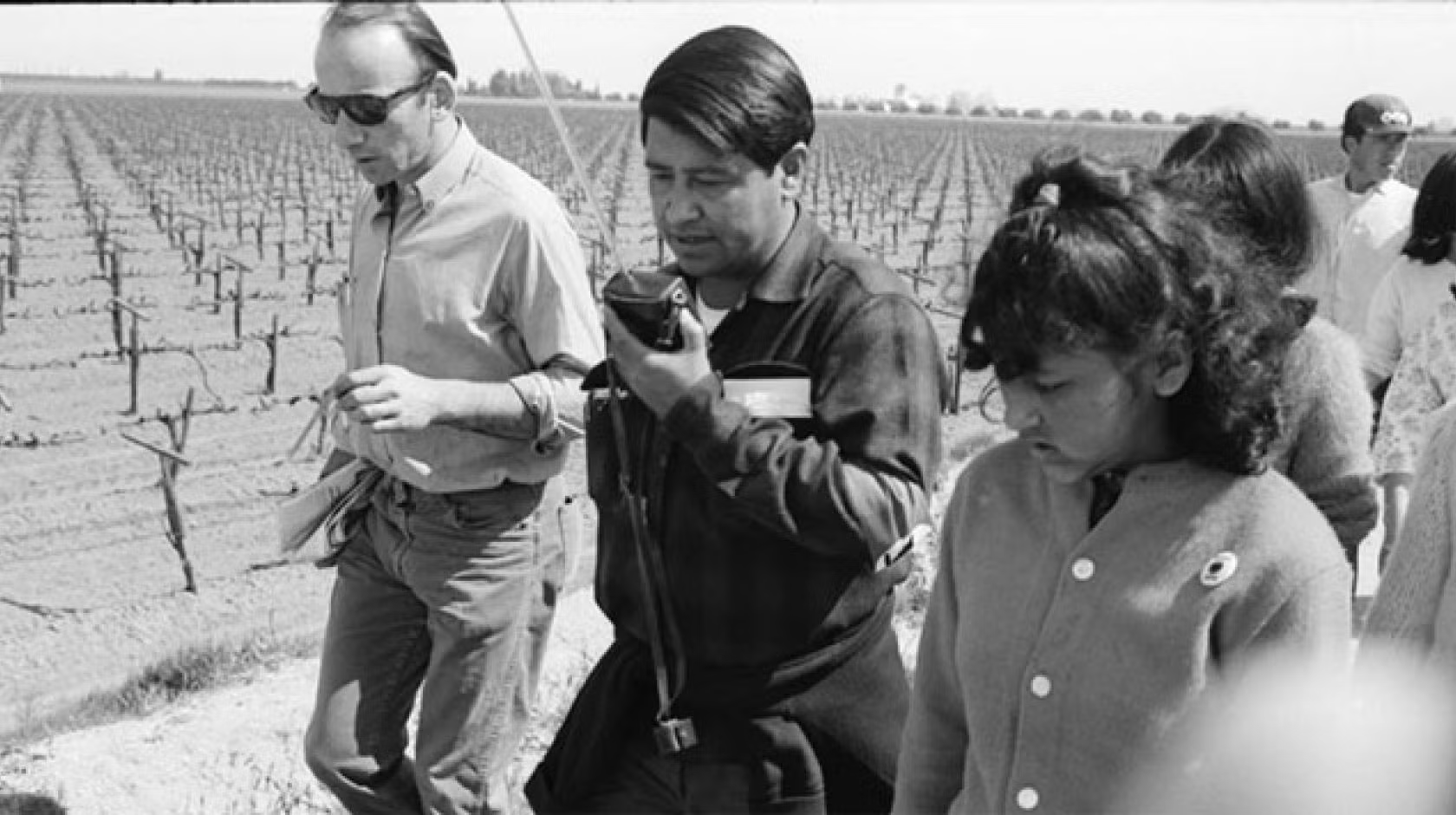
When I read Dolores Huerta’s Facebook post about César Chávez, it was the first I learned about the New York Times article. I was in my daughter’s bedroom and literally gasped in horror. I posted my support for Ms. Huerta on Facebook, but also wrote, “I have no words,” because I didn’t. I had to process the fall of one of my heroes. Now, I’ve read the articles, the posts, and the comments, and I have a lot to say. I won’t say it all here, but there is one thing I desperately need to express. We need to stop placing people upon pedestals.
Perhaps it is human nature; perhaps it is culture, but I dare to say that most (many?) of us want to immortalize human beings such that they are practically gods. But all heroes fall short of that distinction, often very short. For example, Presidents George Washington and Thomas Jefferson were slave owners. President Washington made leggings out of Native American skin. President Thomas Jefferson slept with a 14-year-old girl he legally owned. But who wants to accept that? I remember my own shock when I learned from my US history teacher back in high school that these men were not perfect. “Don’t measure historical figures by the morality of our times,” people say, but right and wrong are imprinted on our collective conscience. In fact, Thomas Jefferson acknowledged that slavery was wrong, but power and money trumped what he knew.
In more recent history, Dr. Martin Luther King cheated on his wife. Gandhi was at one point racist against Africans and slept naked next to his underage great niece to test his own resolve.
We have seen the downfall of actors whose works were social movements as well. Dr. Bill Cosby, America’s dad, was incarcerated for sexual assault (although the conviction was overturned). Steven Collins of Seventh Heaven admitted to exposing himself in front of young girls.
And now, we learn that Mr. Chavez sexually assaulted women and children.
Many ask why Ms. Huerta did not come out and talk about it earlier. She has made clear that she felt the need to protect the farmworkers’ movement. In other words, she wanted to protect others’ civil rights and therefore, sacrificed herself. But what if we did not live in a celebrity culture where the farmworkers’ movement could have conceivably been destroyed by exposing the faults of one man? What if we lived in a society where rather than idolizing men (or women), we idolized movements?
After all, while Presidents Washington and Jefferson were not perfect, the ideals of democracy are still our country’s ideals. That should not change. Dr. King faulted on the Ten Commandments, but the aim for social justice through the Civil Rights Movement continues to be and should be our goal. Gandhi was not the symbol of perfection many saw him to be, but the nonviolent independence movement in India set an example for Civil Rights movements in the US and South Africa. And can we please accept that Dr. Cosby and Mr. Collins are not the same people as Dr. Huxtable and Rev. Eric Camden respectively?
I’m not saying that championing movements without idolizing their leaders is easy. Practically everyone I have cited here has been on my list of heroes. But without idolizing these leaders, can’t we ensure that the movements do not die?
Ms. Huerta helps us think through this question. First, she asks us not to replace Mr. Chavez’s name with hers on buildings and/or for holidays. She asks us to instead recognize those who martyred themselves for the cause. Could it be that if we look for the unsung heroes of important causes and sing their names, our obsession with single heroes would start to fade?
Or perhaps rather than looking for names at all, we should build a culture that honors ideals. For instance, maybe we should name schools after the Declaration of Independence or after democracy rather than after Thomas Jefferson? Perhaps holidays should be named after the causes they support. Maybe we don’t need statues at all, and rather need plaques and murals commemorating historical moments.
Perhaps I am wrong. There is research to say that role models for youngsters, especially minority youth, is crucial to their success. But then, maybe we need to teach our kids to model themselves after the good in these people while recognizing that their models (rather than heroes) have bad in them too, bad that we may or may not know about but bad that we definitely want to avoid imitating. Maybe statues need to be accompanied by plaques that tell the full story about people as we learn them, warts and all.
But if we can stop placing people upon pedestals, maybe singleton heroes won’t gain the power they need to victimize others. Maybe people won’t feel that they can shoot someone on 5th avenue, and that their followers won’t bat an eye. And if such people do still victimize others, victims such as Ms. Huerta won’t fear speaking about it.
I stand with Dolores Huerta, Esmeralda Lopez, Ana Murguia, Debra Rojas, and all the others who have come forward with their stories of abuse. And I hope we can make it easier for victims to do so in the future.
 Language and Equity Blog