
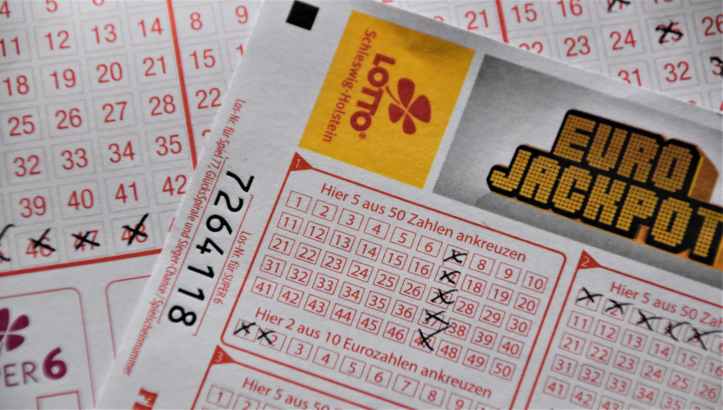
About this time every year, schools are working hard to test their incoming students for language proficiency and to determine who will go into their Dual Language Bilingual Education (DLBE) programs. Administrators have to decide who makes the cutoff and who does not. They have to determine if they should have a lottery. And if they should have separate lotteries for different linguistic groups. In today’s article, let’s talk about what you have to consider before placing your students into your classrooms.
- First, determine if your program is a One-Way or a Two-Way Dual Language Bilingual Education (DLBE) program. One-Way DLBE programs primarily service one linguistic demographic group. In One-Way Developmental DLBE programs in particular, all students served must have the Language Other Than English (LOTE) spoken at home, regardless of how strong the students are in the language. If you have a Two-Way DLBE program, you will choose your student in accordance to which demographic group they belong. You must have either 50% of your students be dominant LOTE speakers and 50% be dominant English speakers or you should have 33% of your students dominant LOTE speakers, 33% of your students be dominant English speakers, and 33% be balanced bilinguals.
- Determine if your ratio of students interested to the spaces available per demographic group. If you have less spaces than you have students for a particular demographic group, you need to have a lottery. For instance, let us suppose that you have 50 English speakers but only 25 spaces for English speakers and that you have 20 Korean speakers with 25 spaces for Korean speakers. You will need to have a lottery only for your English speakers.
- What if I have more English speakers interested than speakers of the LOTE? Can I give the extra spaces for LOTE speakers to my English speakers? If you lose the balance described in question 1, you will no longer have a Two-Way DLBE classroom. If you do not have students in your district who are speakers of the LOTE and your demographic patterns do not suggest that more LOTE speakers will enroll, you may simply not be able to have a Two-Way DLBE program. In that case, open your DLBE classroom to all your LOTE speakers and fill the rest with English speakers, acknowledging that you have a One-Way DLBE program that primarily services English speakers. If you expect to have more LOTE speakers join the district after the start of the new year based on past demographic patterns, hold the seats for them. On the other hand, if your LOTE speakers are not signing up for DLBE, you need to work on your promotional efforts with your LOTE speaking families, not give away their seats. I will be writing an article on how to do that soon.
- How do I determine which demographic group a student belongs to? You need to test students in both languages. If you measure students for levels 1-5, students who are either equal in both languages or 1 level apart are balanced bilinguals. Students who have a difference of 2 or more levels should be classified according to their dominant language for the purposes of DLBE. (State ESL classifications will vary according to state guidelines.)
- How do I classify third language speakers? Third language speakers should be allowed into DLBE programs. There are many ways to consider third language speakers. One way is to follow the same rule set in question 4. If they know some English, they are predominantly English speakers for the purposes of DLBE. If they do not know any English, they are balanced bilinguals for the purposes of DLBE.
I hope this helps you with planning for the new year. If you need more help, don’t hesitate to reach out.
 Language and Equity Blog